
Faux Wood vs. Vinyl Blinds: Which Should You Choose?
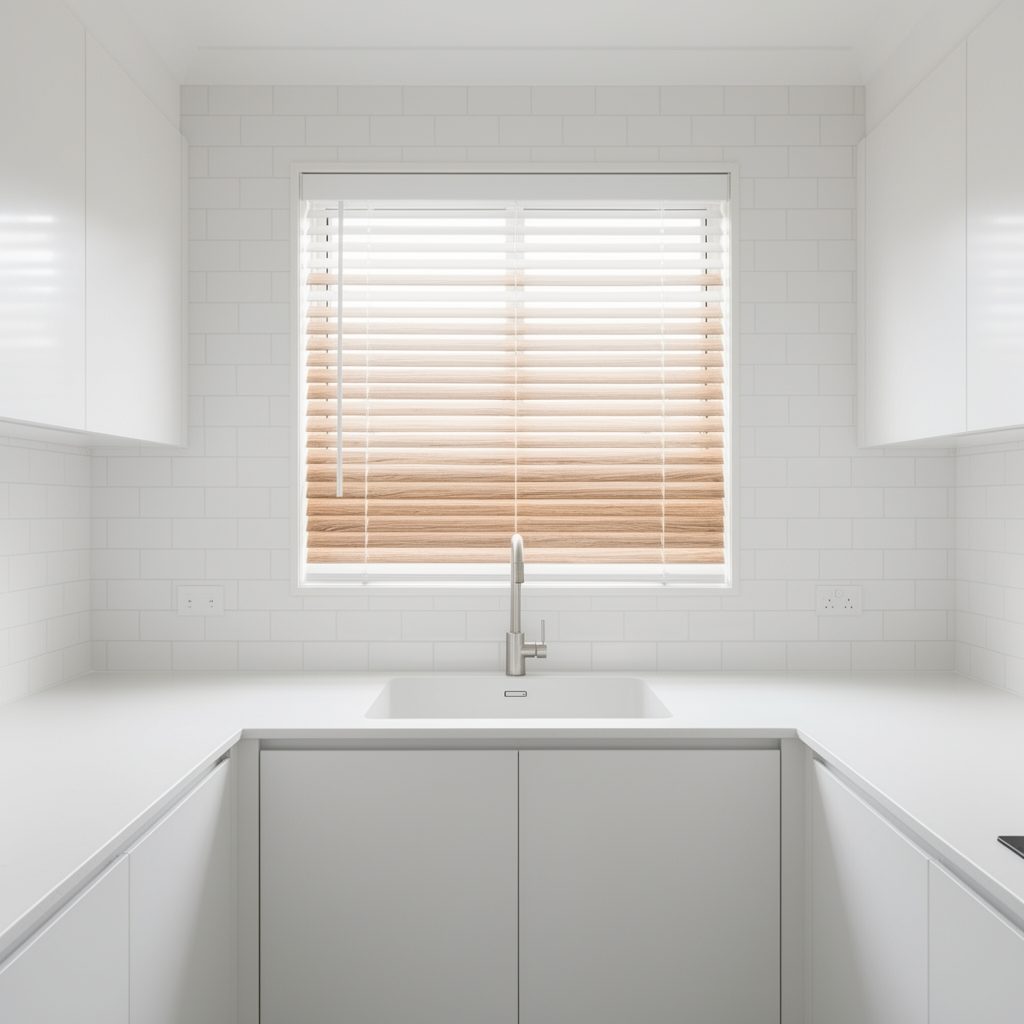
Faux wood and vinyl blinds are two of the most popular budget-friendly choices, and people often mix them up. They overlap but are not the same, and the difference shows in looks and durability. Here is an honest comparison to help you choose the better value for a Houston home.
Faux wood vs. vinyl blinds
| Feature | Faux wood | Vinyl |
|---|---|---|
| Look | Rich, wood-like | Plain, utilitarian |
| Durability | Sturdier slats | Can bend |
| Moisture resistance | Excellent | Excellent |
| Cost | Slightly higher | Lowest |
What each one is
Vinyl blinds are made from lightweight PVC, an inexpensive, functional, moisture-proof option. Faux wood blinds are typically made from a composite of PVC and wood or a higher-grade PVC, engineered to look like real wood with a richer texture and finish. Faux wood is essentially the upgraded, more wood-like cousin of basic vinyl.
Looks and feel
This is the biggest difference. Faux wood blinds convincingly mimic real wood, with grain, substance, and a premium look that suits living areas and front rooms. Basic vinyl blinds look plainer and more utilitarian, fine for a utility space or tight budget, but they lack the warmth and richness of faux wood. If appearance matters, faux wood wins clearly.
Durability and moisture
Both resist moisture well, a big plus in humid Houston, and both wipe clean easily. Faux wood is generally sturdier with thicker, more rigid slats that resist bending, while thin vinyl slats can bend or warp more easily, especially in heat or with heavy use. For durability, faux wood again has the edge.
Cost and value
Vinyl is the cheaper of the two, which is its main appeal. Faux wood costs a bit more but delivers a much better look and greater durability for the modest difference. For most living spaces, that small premium is well worth it, while vinyl can make sense for a rental, garage, or utility window where budget rules.
Which to choose
Choose faux wood for living areas, bedrooms, and anywhere the look matters, it gives the wood look, resists Houston humidity, and lasts. Choose basic vinyl for the tightest budgets and utility spaces. We will help you put faux wood where it counts and value options elsewhere, with free measuring and installation. Call or text (832) 772-7137.
Ready for a free in-home estimate?
We’ll measure, recommend the right options for your home, and give you an honest quote, with free installation included. Already know your sizes? Order online and we’ll send a free quote within 24 to 48 hours.
 How Much Do Blinds, Shutters & Shades Cost in Houston? (2026 Guide)
 Child-Safe & Cordless Window Coverings: What Parents Need to Know