
Roller Shades vs. Cellular Shades: Which Is Better?
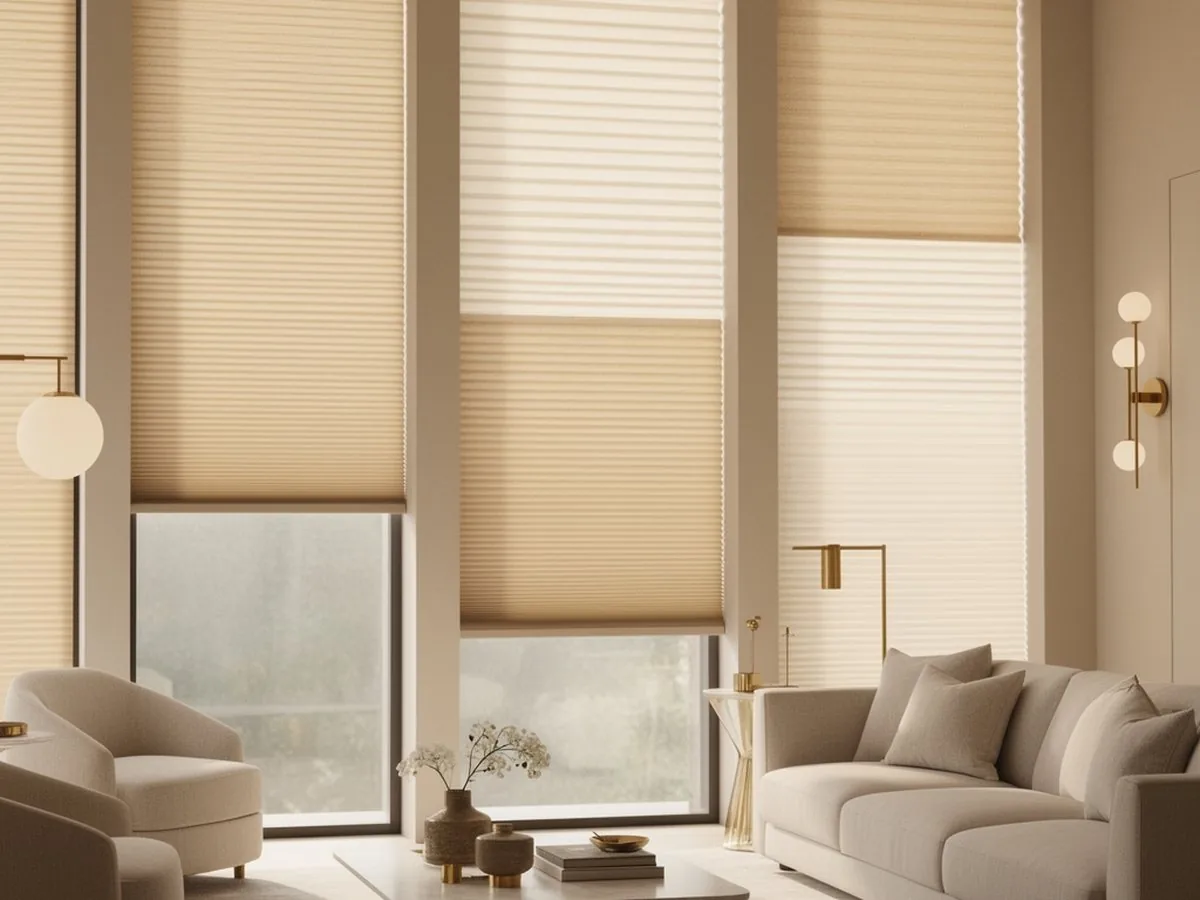
Short answer: cellular shades are better for insulation and for dark bedrooms, because their honeycomb cells trap air at the window. Roller shades are better for a clean modern look, for cutting glare while keeping your view, and for easy cleaning, and they often cost a little less. Many Houston homes use both. Here is a straight comparison so you can choose room by room.
Roller vs. cellular shades
| Feature | Roller shades | Cellular shades |
|---|---|---|
| Look | Flat, modern | Soft honeycomb folds |
| Insulation | Low (single fabric layer) | Best (trapped air in cells) |
| Glare control with a view | Best (solar fabrics) | Fair (fabric diffuses the view) |
| Bedroom blackout | Very good with blackout fabric; some light at the edges | Very good with blackout cells; some light at the edges |
| Stack when raised | Tight roll | Slightly larger |
| Cleaning | Easiest: smooth face | Gentle vacuum only |
| Cost | Often lower | Modest premium |
The look
Roller shades are flat, clean, and modern, a single panel of fabric that rolls up out of sight, available in hundreds of colors, patterns, and opacities including crisp solar screens. Cellular shades have a soft, pleated honeycomb profile that reads a touch more classic and cozy. If your style is contemporary and minimal, rollers win on looks, for a softer feel, cellulars do.
Energy efficiency
This is where cellular shades lead. The honeycomb cells trap a layer of air at the window, which slows heat coming in on summer afternoons and escaping on cold nights. A roller shade is a single layer of fabric: a solar roller blocks a good share of glare and direct sun, but it has no air pocket, so it does not insulate the way a cellular does. The best public research on cellular shades comes from the Department of Energy. In a study led by Oak Ridge National Laboratory, cellular shades saved up to 20% of heating energy and up to 15% of total heating and cooling energy in modeled homes, compared with having no shades at all. Two honest caveats: that work focused on the heating season, and the researchers note that cooling-season benefits still need more study, so treat the numbers as a guide rather than a promise for a Houston summer.
Light control
Both come in everything from sheer to blackout. Solar-screen rollers are unmatched for cutting glare while keeping the view, ideal for a TV room or a home office with a nice outlook. Cellulars excel at insulating blackout for bedrooms and nurseries, and top-down bottom-up cellular options give great light-and-privacy flexibility.
Roller blinds vs cellular shades: same comparison
"Roller blinds" and "roller shades" are two names for the same product: a single panel of fabric that rolls up around a tube at the top of the window. So if you are comparing roller blinds with cellular shades, everything on this page applies. Cellular shades are sometimes called honeycomb shades or honeycomb blinds, which is also the same product.
Solar roller shades and openness
Solar roller fabrics are rated by openness, the percentage of the fabric that is open to light and view, commonly around 1%, 3%, 5% or 10%. A lower openness blocks more glare and sun but softens the view; a higher openness keeps more of the view but lets more light in. For a west-facing living room in Houston, a low openness solar roller is a popular way to tame afternoon glare without losing the outside.
Cleaning and upkeep
Roller shades are the easier of the two to keep clean: the face is smooth and flat, so a vacuum with a brush attachment or a lightly damp cloth handles most dust and marks. Cellular shades have cells and folds that hold dust, so they need gentle vacuuming and should never be soaked. In a dusty room, a roller is the more practical of the two; right next to a stove or sink, faux wood blinds are easier still.
Cost
Pricing overlaps and depends on fabric, size, and lift system, but roller shades often start a little lower, while cellular shades carry a modest premium for their insulation, with double cell and blackout fabrics at the top of the range. Motorization adds a similar amount to either. Your exact price is confirmed free at an in-home measure.
How to choose
Pick roller shades for a modern look, glare control with a view, and value. Pick cellular shades for maximum energy efficiency and cozy insulating blackout in bedrooms. Many homes use both, solar rollers in living areas, cellulars in bedrooms. We will show you samples side by side at your free estimate.
Ready for a free in-home estimate?
We’ll measure, recommend the right options for your home, and give you an honest quote, with free installation included. Already know your sizes? Order online and we’ll send a free quote within 24 to 48 hours.


