
Different Types of Window Shades, Explained
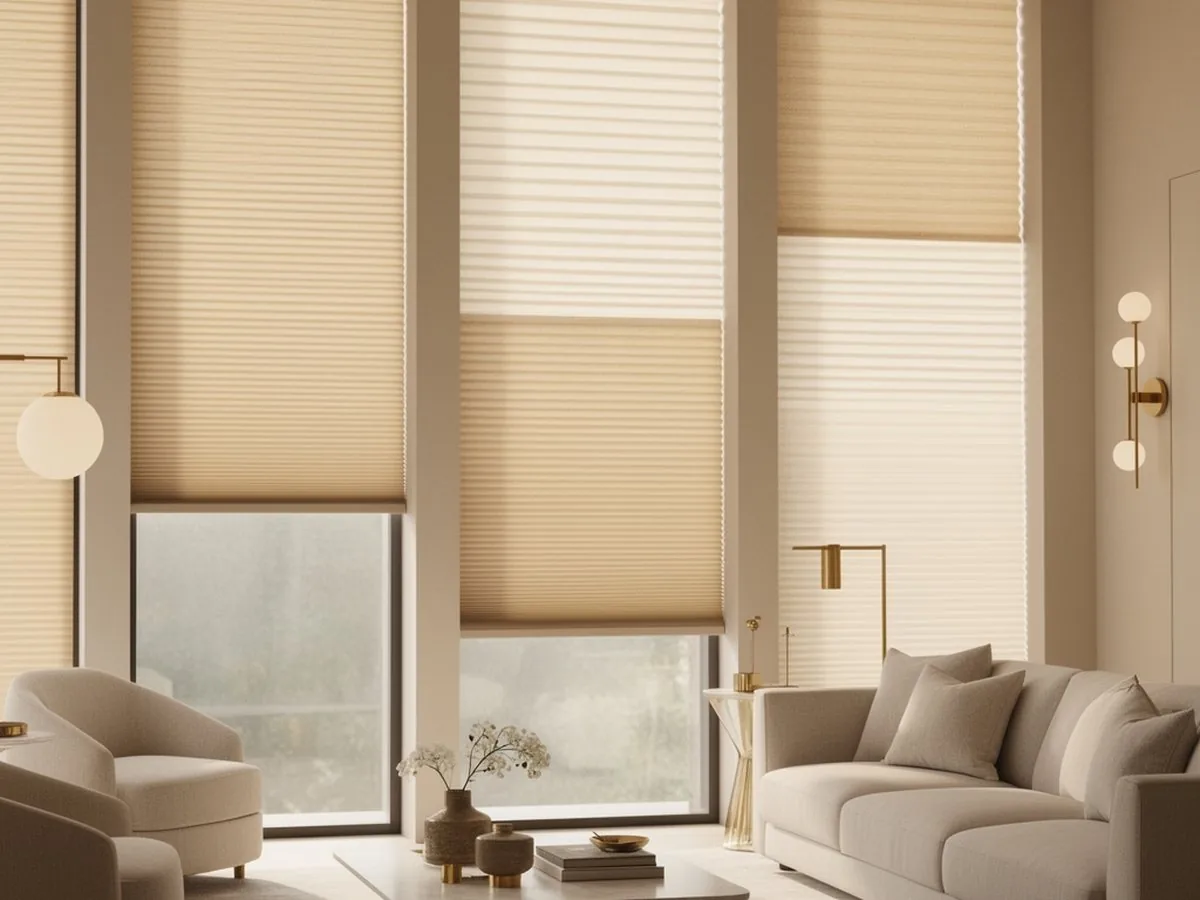
Shopping for shades gets confusing fast, because every brand uses its own names. Underneath the names there are only a handful of real types, and each one is built to do something slightly different. Here are the main types of window shades we install around Houston, what each is good at, and the rooms where it tends to work best.
Common types of window shades compared
| Shade type | Light control | Insulation | Privacy | Good rooms |
|---|---|---|---|---|
| Roller | Depends on fabric, from sheer to blackout | Low | Good when lowered | Living rooms, offices, kitchens |
| Solar / screen | Cuts glare, keeps the view | Low | Limited at night | West-facing rooms, media walls |
| Cellular / honeycomb | Light filtering or blackout | High | Good | Bedrooms, sunny rooms, whole home |
| Roman | Light filtering or blackout lining | Moderate | Good | Dining rooms, bedrooms, kitchens |
| Zebra / banded | Adjustable bands | Low | Adjustable | Living rooms, bedrooms |
| Sheer shadings | Soft, adjustable vanes | Moderate | Adjustable | Living rooms, primary bedrooms |
| Woven wood | Filters light, can add a liner | Low to moderate | Better with a liner | Living rooms, sunrooms |
Roller shades and solar shades
A roller shade is a single flat panel of fabric that rolls up onto a tube at the top of the window. It is the simplest and cleanest-looking shade, and the fabric choice does all the work: sheer, light filtering, room darkening or blackout. Solar shades, also called screen shades, are roller shades made from an open-weave fabric that cuts glare and heat while keeping the view out. Hunter Douglas makes these as Designer Roller and Designer Screen shades. Solar fabric is excellent on bright west-facing windows, but remember that at night, with lights on inside, people can see in.
Cellular (honeycomb) shades
Cellular shades are built from pleated fabric bonded into hexagon-shaped cells that trap air. That trapped air makes them the most insulating shade type, which is why they are popular in Houston bedrooms and on sunny walls. They come in single and double cell, in light filtering and blackout fabrics, and with options like top-down bottom-up. Hunter Douglas Duette and Applause are both honeycomb shades.
Roman shades
Roman shades are fabric shades that fold into soft horizontal pleats as they rise. They are chosen mainly for their look, since they bring a tailored, upholstered feel that roller shades do not. They can be lined for privacy or blackout. Hunter Douglas Vignette Modern Roman Shades are a cordless version with a cleaner, more contemporary fold.
Zebra (banded) shades and sheer shadings
Zebra shades, also called banded or dual shades, use two layers of fabric with alternating sheer and solid stripes. Sliding the layers lines up the stripes so you can switch between a view-through look and privacy without raising the shade. Sheer shadings work on a similar idea with more refinement: fabric vanes float between sheer layers and tilt open or closed. Hunter Douglas Silhouette and Pirouette window shadings are the best-known examples.
Blackout shades
Blackout is a fabric choice rather than a separate shade type. Roller, cellular and Roman shades can all be made in blackout fabric for bedrooms, nurseries and media rooms. Even a blackout fabric lets some light in around the edges, so for a truly dark room we look at mounting, side channels or layering with another treatment.
Woven wood shades
Woven wood shades are made from natural materials such as bamboo, reeds and grasses. They add texture and warmth and suit relaxed, transitional and coastal interiors. On their own they filter light rather than block it, so most people add a privacy or blackout liner in bedrooms and street-facing rooms. Hunter Douglas Provenance woven woods are one example.
Motorization works with most of them
Motorization is an option rather than a type. Roller, cellular, Roman, sheer and many other shades can be motorized with Hunter Douglas PowerView, which lets you raise and lower them from a remote, an app, a schedule or a voice assistant. It is most useful on tall windows, hard-to-reach windows and rooms with many shades. To compare these in person, we bring samples to a free in-home estimate.
Ready for a free in-home estimate?
We’ll measure, recommend the right options for your home, and give you an honest quote, with free installation included. Already know your sizes? Order online and we’ll send a free quote within 24 to 48 hours.


